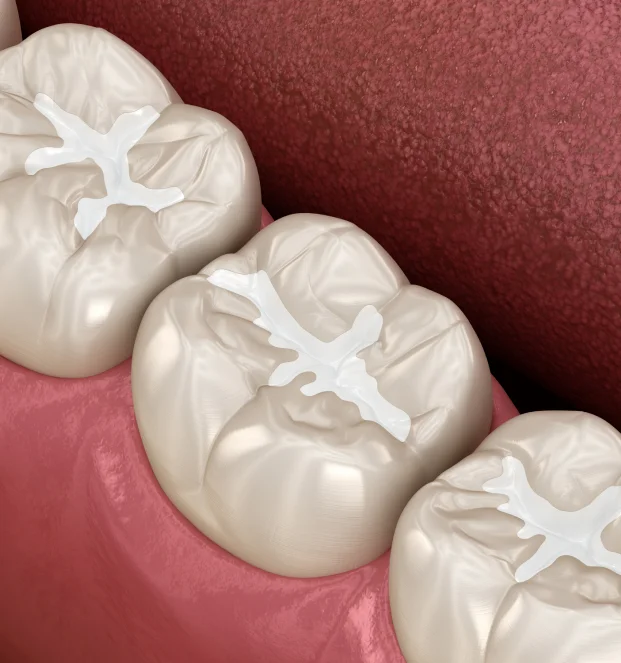
What Are Dental Sealants?
Dental sealants are a type of preventive treatment that works to protect teeth from cavities. They are among the simplest, yet most powerful and effective, preventive treatments available. Sealants are made of clear or tooth-colored resin material and are painted onto the chewing surfaces of the teeth to form a smooth, protective barrier over the natural pits and grooves of the tooth surfaces. This blocks out food debris, harmful bacteria, and plaque, and it has the added benefit of making it easier for you to clean your teeth with regular brushing and flossing.
Think of a sealant as a raincoat for your molars. The deep grooves on your back teeth trap food and bacteria, and a toothbrush bristle often cannot reach the bottom of them. A sealant fills in those grooves so they are smooth and easy to keep clean.
Are Dental Sealants Right for You or Your Child?
Sealants are most frequently recommended for children after their permanent molars begin to erupt, usually between the ages of 6 and 12. Dental sealants are also available for adults who are at greater risk of developing tooth decay.
You or your child may be a good candidate for dental sealants if:
- Permanent molars or premolars have recently come in
- The chewing surfaces of the teeth have deep pits and grooves
- Cavities have been a problem in the past
- Back teeth are hard to brush well
- The teeth do not already have fillings or decay on their chewing surfaces
Our dentists will examine the teeth, review your history, and recommend sealants only where they will help.
Sealant Application: Quick, Painless, and Done in One Visit
Getting sealants is one of the easiest dental procedures. Sealants can be applied in just a few minutes as part of your regular dental appointment. Our dentists will simply coat the chewing surfaces of your teeth with the sealant material, and it will either dry quickly on its own or be cured with a special light. Here is what the visit typically looks like.
01
Examination and cleaning
Our team checks the teeth that will be sealed and cleans away plaque and debris so the sealant can bond properly.
02
Drying and preparing the surface
The teeth are dried and prepared so the sealant sticks well to the enamel.
03
Applying the sealant
The sealant is painted onto the chewing surface and flows into the pits and grooves.
04
Hardening the sealant
The material either dries on its own or is hardened with a special light.
05
Final check
Our dentists make sure your bite feels comfortable and explain how to care for the sealed teeth. You can usually eat and drink as normal right away.
Why a Sealant Is a Smart Way to Prevent Tooth Decay
- Targeted protection: sealants cover the exact spots where cavities are most likely to start.
- Quick and comfortable: there is no drilling, no shots, and no recovery time.
- Natural-looking: clear or tooth-colored material blends in with your smile.
- Easier home care: smooth surfaces are simpler to brush and floss.
- Cost-conscious: preventing a cavity is usually simpler and less costly than treating one with a filling or root canal.
- Supports a lifetime of healthy teeth: protecting permanent molars early helps them last.
Preventive Care for Families in Camp Springs, Largo, Bowie, and Lanham
Smile Loft Branch Ave. is located at 4703 Old Soper Rd., 2C Camp Springs, MD 20746, and welcomes families from Largo, Bowie, Lanham, and nearby communities. Many dental plans include coverage for sealants for children, and our team can help you review your benefits. If you do not have insurance, ask about the Smile Loft Membership Club or our financial options. New to our office? Visit our New Patients page. Learn more about dental care in Largo, Bowie, and Lanham.
Give Your Molars the Protection They Deserve
For more information about the benefits of dental sealants and to schedule an appointment with our dentists, please call our office today. We are committed to helping you keep your smile healthy.
Our friendly team welcomes children and adults from Camp Springs, Largo, Bowie, and Lanham. Book a visit and find out whether sealants are a good fit for your family.
Frequently Asked Questions
About Dental Sealants
Dental sealants are thin, clear or tooth-colored coatings painted onto the chewing surfaces of back teeth. They fill in the deep pits and grooves where food and bacteria collect, creating a smooth barrier that helps prevent cavities. Because the surface is smoother, the teeth are also easier to clean at home.
Dental sealants are widely used and are considered a safe, effective preventive treatment. They are made from a resin material that bonds to the tooth. If you have questions about the materials we use or about any allergies, our team will be glad to talk with you before treatment.
No. Applying sealants is typically painless. There is no drilling or numbing, because the material is simply painted onto the surface of the tooth. Most patients, including children, find the process quick and comfortable.
With good care, sealants can last several years. They can wear down with chewing, so our dentists check them at routine dental cleanings and exams and repair or replace them when needed.
Sealants are most often recommended for children soon after their permanent molars erupt, usually between the ages of 6 and 12. Sealing the teeth early helps protect them during the years when cavities are most common. Our dentists will check your child’s teeth and recommend the right timing.
Yes. Dental sealants are also available for adults who are at greater risk of developing tooth decay. Adults with deep grooves in their molars, a history of cavities, or teeth that are hard to clean may benefit. Sealants are only placed on teeth without existing fillings or decay on the chewing surface, so our dentists will examine your teeth first.
Many dental insurance plans cover sealants, especially for children, though coverage and age limits vary. We work with most major dental insurance plans, and our team can help you check your benefits before your visit. If you do not have insurance, ask about the Smile Loft Membership Club.
No. Sealants protect the chewing surfaces of back teeth, but they do not protect the areas between teeth or along the gumline. You still need to brush twice a day, floss daily, and visit our office for regular cleanings and exams to keep your whole smile healthy.