What Is Scaling and Root Planing?
Scaling and root planing is the most commonly used treatment for patients who are in the beginning stages of gum disease. This procedure is a two-step treatment:
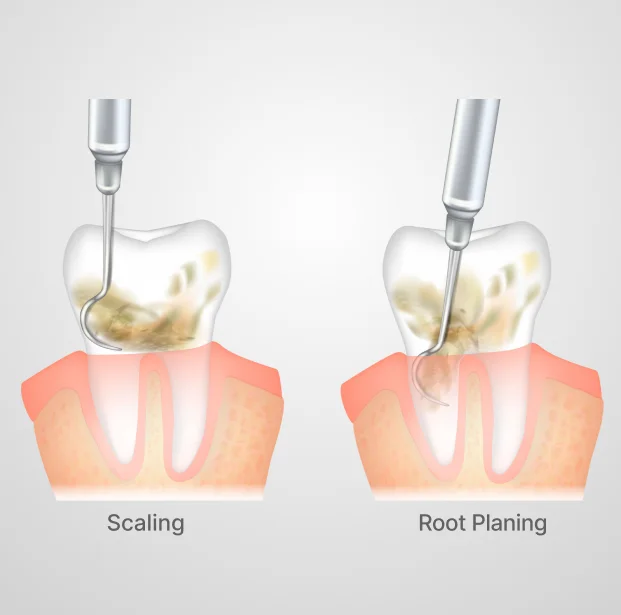
- Scaling: In scaling, we remove the plaque and tartar from the surface of your teeth with handheld or ultrasonic instruments.
- Root Planing: Root planing involves smoothing rough spots on the roots of the teeth and removing any toxins to decrease inflammation of the gum tissue.
Together, these steps clean the teeth above and below the gumline and leave the root surfaces smooth. Smooth roots are harder for bacteria to cling to, which gives your gums a better chance to tighten back around your teeth.
How Deep Cleaning Helps Your Gums, Teeth, and Overall Health
- Stops the progression of gum disease: removes the bacteria and tartar that drive the damage.
- Helps gums heal: reduces inflammation, redness, and bleeding.
- Protects your teeth and bone: helps preserve the structures that hold your teeth in place.
- Freshens breath: clears the bacteria that often cause chronic bad breath.
- Supports whole-body health: research links gum disease with other health concerns, so keeping gums healthy supports your overall well-being.
- Helps you avoid costly treatment: treating gum disease early can help you avoid more complex dental work later.
From Gum Evaluation to Fresh Start: How Your Deep Cleaning Works
The purpose of scaling and root planing is to remove the bacteria, plaque, and tartar that are responsible for the progression of gum disease and causing damage to your smile. The process usually involves little to no discomfort, but our dentists may recommend several anesthetic options if you are highly sensitive or would like to feel more relaxed during the treatment. Scaling and root planing can be done in a single visit, but depending on your condition, our dentists may recommend multiple sessions to help ensure the protection of your oral health. Here is what to expect.
01
A thorough gum evaluation
Our dentists examine your gums, measure the depth of the spaces around your teeth, and review X-rays to see how far the gum disease has progressed.
02
Comfort options
If you are sensitive or would like to feel more relaxed, we can discuss anesthetic options. For patients who feel anxious, we also offer nitrous oxide and IV sedation.
03
Scaling
Using handheld or ultrasonic instruments, our team removes plaque and tartar from the surfaces of your teeth, including below the gumline.
04
Root planing
Rough spots on the roots are smoothed, and bacterial toxins are removed, which helps the gums reattach and reduces inflammation.
05
Care instructions
We explain how to care for your gums while they heal, including gentle brushing, flossing, and what to eat in the first days.
06
Follow-up evaluation
We re-check your gums after healing to see how well they responded and decide on next steps. If you have deeper concerns, our dentists will discuss additional treatment.
Keeping Gum Disease From Coming Back
You may receive other periodontal treatments in addition to scaling and root planing, depending on the severity of the infection. However, scaling and root planing is usually enough to treat most patients who are suffering from gum disease.
Gum disease can return if plaque builds up again, so ongoing care matters. Brush twice a day, floss daily, and keep up with regular dental cleanings and exams. Our team may suggest more frequent visits for a while and can show you techniques that fit your teeth, such as the right flossing method. A professional fluoride treatment can also help protect exposed roots, and we offer treatments for sensitive teeth if cold or sweets bother you after treatment.
Paying for Gum Disease Treatment: Insurance and Financing Options
Treating gum disease early can help you avoid more involved care later, and we want cost to be clear from the start. Our team will explain what your treatment involves and how many visits are likely, then help you see how your plan may apply.
Many dental plans treat deep cleaning as part of gum care, and our team can help you check your benefits and file your claim. If you are paying out of pocket, we accept cash, checks, and credit cards, and we can talk with you about financing, including Cherry. The Smile Loft Membership Club is another option for patients without insurance.
Give Your Gums the Care They Need
To learn more about how scaling and root planing can benefit you, please call or visit us today!
Gum disease is easier to treat the sooner it is caught. Our friendly team welcomes patients from Camp Springs, Largo, Bowie, Lanham, DC, and Virginia, and we are ready to help you take the first step toward healthier gums.
Frequently Asked Questions
About Scaling & Root Planing
Scaling and root planing is a deep cleaning procedure that treats gum disease. In scaling, plaque and tartar are removed from the teeth, including below the gumline. In root planing, rough spots on the tooth roots are smoothed so the gums can heal and reattach more easily. It is the most commonly used treatment for early gum disease.
The procedure usually involves little to no discomfort. If you are sensitive or would like to feel more relaxed, our dentists can recommend anesthetic options. Your gums may feel tender for a few days afterward, which is normal. If you feel nervous, ask about sedation dentistry.
Scaling and root planing can be done in a single visit, but depending on your condition, our dentists may recommend multiple sessions. The number and length of visits depend on how much of your mouth is affected and how advanced the gum disease is. We will explain the plan before we begin.
Yes. A regular cleaning removes plaque and tartar from the surface of the teeth and just under the gumline, and is meant to prevent problems. Scaling and root planing is a deeper treatment that cleans below the gumline and smooths the roots to treat existing gum disease. Our dentists will recommend the right one after examining your gums.
Early gum disease, called gingivitis, can often be reversed with professional treatment and good daily care. More advanced gum disease, called periodontitis, cannot be fully reversed, but treatment can stop it from getting worse and help your gums heal. That is why early treatment matters.
You may have some tenderness, mild bleeding, and sensitivity for a few days. Brush gently, rinse with warm salt water if advised, and choose softer foods. Most patients return to their normal routine quickly. Our team will give you specific instructions and schedule a follow-up to check how your gums are healing.
Common signs include bleeding, swollen, or tender gums, persistent bad breath, gums pulling away from teeth, and loose teeth. Only a dental exam can confirm gum disease, since it often has no pain in the early stages. Our dentists will measure your gum pockets and review X-rays to find out whether you need treatment.
Many dental insurance plans help cover scaling and root planing when it is needed to treat gum disease, though coverage and limits vary. We work with most major dental insurance plans, and our team can help you review your benefits. If you do not have insurance, ask about the Smile Loft Membership Club or our financing options.