What Is a Dental Bridge, and How Does It Work?
Dental bridges are a permanent solution to your struggle with missing teeth. As a fixed dental restoration, a bridge can replace single or multiple missing teeth and restore function in your smile.
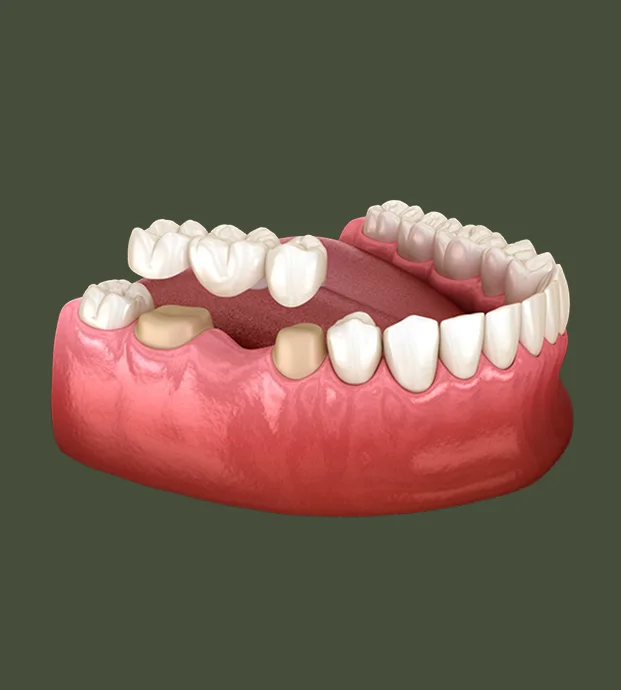
A bridge is made up of an artificial tooth, or several, joined to crowns on either side. Because it is fixed in place, you do not remove it for cleaning like a denture. Porcelain is a popular material because it can be matched to the color and natural glow of your teeth, so the bridge blends in with the rest of your smile. The most common benefits of a dental bridge include:
- Full restoration of speaking and eating abilities
- Improvement in the shape and volume of your face
- Enhancement of the aesthetics of your smile
- Prevention of your surrounding teeth becoming misaligned
Is a Porcelain Bridge Right for Your Missing Teeth?
You may be a good candidate for a dental bridge if you:
- Are missing one tooth or several teeth in a row
- Have healthy teeth or implants on each side of the gap to support the bridge
- Have healthy gums and no active gum disease
- Want a fixed solution that does not come out like a denture
- Prefer a treatment that does not require surgery
Our dentists will examine your teeth and gums and review digital X-rays to make sure the supporting teeth are strong enough.
Your Bridge Journey: From First Visit to Final Fit
During a dental bridge procedure, your restoration is anchored in place using two dental crowns customized to fit securely in your smile. The crowns will be placed over your teeth or implants nearest to your missing tooth to support your new artificial tooth and hold it tightly in place. Most often, this procedure requires only two visits to our practice to be completed. Here is how the process typically works.
01
Consultation and exam
Our dentists examine your teeth and gums, review your X-rays, talk with you about your goals, and explain your options.
02
Preparing the supporting teeth
At your first treatment visit, we numb the area and gently reshape the teeth on either side of the gap so crowns can fit over them. If implants will support the bridge, they are used in place of natural teeth.
03
Impressions or scans
We take detailed impressions or digital scans of your mouth. With iTero® digital scanning, this step can be quick and comfortable.
04
A temporary bridge
While your custom bridge is made, you typically wear a temporary one to protect your teeth and keep your smile looking natural.
05
Custom fabrication
Your bridge is crafted in a dental laboratory to match the color, shape, and size of your natural teeth.
06
Final fitting and adjustments
At your second visit, we remove the temporary bridge, check the fit and your bite, and bond the final bridge in place. Small adjustments are made so it feels comfortable.
Types of Dental Bridges
Bridge designs vary, and our dentists will recommend the one that suits your situation:

Traditional Bridge
Crowns on the teeth on both sides of the gap hold the replacement tooth in place.
Cantilever Bridge
Used when there is a supporting tooth on only one side of the gap.
Resin-bonded Bridge
A thin framework bonded to the back of neighboring teeth, sometimes used for front teeth.
Implant-supported Bridge
Supported by dental implants instead of natural teeth, when several teeth are missing. Learn about our dental implant restorations.
Paying for a Dental Bridge: Insurance and Financing Options
Protecting a damaged tooth with a crown is an investment in your long-term oral health, and we make sure you know what to expect before we begin. Your treatment plan will outline each step, and our team will explain the costs in plain language.
We accept most major insurance plans and can help you understand how your benefits may apply to a crown. Without insurance, the Smile Loft Membership Club offers a simple way to access basic dental care, and we take cash, checks, and credit cards. If you would like to break up a larger bill, ask us about financing.
See our insurance and financing pageReady to Fill the Gap and Smile With Confidence?
Our dentists and team are happy to meet with you and examine your smile for treatment. If you are interested in learning more about how you can receive a dental bridge, we invite you to contact our team today and set up a visit. We look forward to hearing from you!
Our friendly team welcomes patients from Camp Springs, Largo, Bowie, Lanham, DC, and Virginia. Book a consultation and find out whether a porcelain bridge is right for you.
Frequently Asked Questions
About Porcelain Dental Bridges
A porcelain dental bridge is a fixed restoration that replaces one or more missing teeth. It consists of an artificial tooth, or several, attached to crowns that fit over the teeth or implants on either side of the gap. Porcelain is shaded to match your natural teeth, so the bridge looks natural and restores your ability to chew and speak.
Most often, getting a dental bridge requires only two visits to our practice. At the first visit, we prepare the supporting teeth and take impressions, and you receive a temporary bridge. At the second visit, we place your custom bridge. The timeline can vary depending on your needs and any treatment you need first.
Most patients find the process comfortable. Our team numbs the area during preparation, so you should feel pressure but not pain. Your teeth and gums may feel sensitive for a few days afterward, which typically fades. If you feel anxious about dental visits, ask about sedation dentistry.
Dental bridges are crafted from strong, durable material, and with good care, they can last many years. How long yours lasts depends on your oral hygiene, your habits, and the health of the supporting teeth. Regular cleanings and exams help us catch any problems early.
Brush twice a day with fluoride toothpaste, and clean under the bridge every day, using floss threaders, interdental brushes, or a water flosser. Keeping the area clean protects the supporting teeth and gums. Visit our office for regular dental cleanings and exams, and avoid chewing very hard foods or objects.
Both can replace missing teeth, and the right choice depends on your health, your jawbone, and your goals. A bridge is a fixed option that typically takes only a couple of visits and does not require surgery. An implant replaces the tooth root and stands alone without relying on neighboring teeth. Our dentists will review both options with you at your consultation.
Yes. A bridge restores your ability to chew and speak. After your bridge is placed, it is a good idea to start with softer foods while you get used to the feel, and to avoid very hard or sticky foods that could damage the restoration. Our team will give you specific instructions.
Many dental insurance plans help cover part of the cost of a bridge, though coverage and limits vary by plan. We work with most major dental insurance plans, and our team can help you review your benefits before treatment. If you do not have insurance, ask about the Smile Loft Membership Club or our financing options.