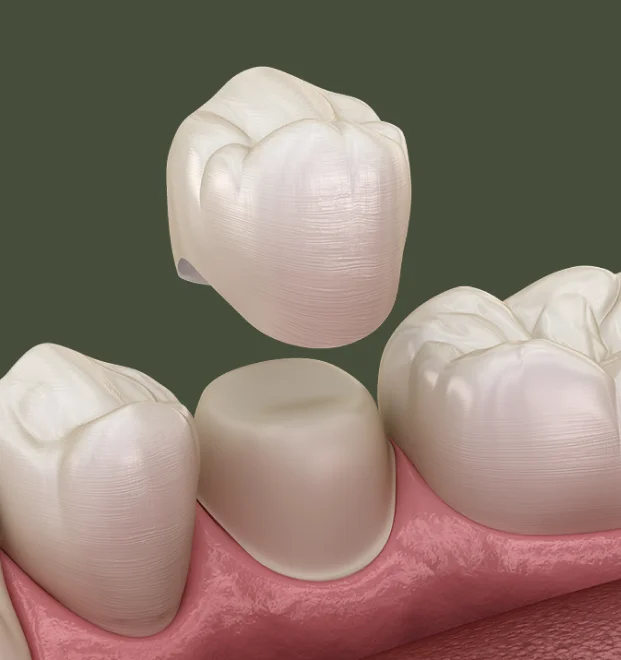
What Is a Dental Crown?
Dental crowns, or dental caps, are a type of restorative treatment recommended when your teeth have sustained damage or decay. A crown is designed to fit over the entire visible portion of the tooth in order to restore its original shape and size and protect it from further damage. Crowns may be made of several different materials, but the most popular type of dental crowns are made of porcelain due to the fact that it matches the appearance and durability of your original tooth.
Our skilled dentists may recommend a dental crown to:
- Restore a tooth after it has sustained damage due to injury or tooth decay
- Protect a tooth after a root canal treatment
- Anchor a dental bridge
- Cap and complete a dental implant
- Strengthen a tooth that is cracked, fractured, or weakened
- Support a tooth with a large filling
- Improve a misshapen tooth
- Enhance the appearance of your teeth and smile
Why Patients Choose Porcelain Crowns
- A natural look: porcelain can be matched to the color and glow of your teeth.
- Protection for weak teeth: a crown holds a cracked or heavily restored tooth together.
- Restored chewing strength: you can bite and chew comfortably again.
- Long-lasting: with good care, crowns are designed to last for many years.
- A smoother, healthier-looking smile: crowns can improve the shape and appearance of a misshapen tooth.
- Support for other treatments: crowns complete implants and anchor bridges.
- Helps avoid tooth loss: protecting a damaged tooth early can help you keep it.
From Tooth Preparation to a Beautiful Final Crown: Your Two-Visit Journey
Dental crowns typically require two appointments to complete. During the first appointment, our dentists will take impressions and prepare your tooth to receive the crown. A temporary crown will be placed to protect your tooth while your final restoration is completed. At the second appointment, we will check the fit of the crown and bond it into place to fully restore the tooth.
01
Examination and planning
Our dentists examine the tooth and review your X-rays to confirm that a crown is the right treatment.
02
Numbing and shaping
We numb the area for your comfort, then gently reshape the tooth so the crown fits over it. If decay is present, it is removed.
03
Impressions
During your first appointment, our dentists will take impressions and prepare the tooth for crown placement. We can also use iTero® digital scanning to capture precise images.
04
Temporary crown
A temporary crown will be placed to protect your tooth while your final restoration is completed.
05
Checking the fit and shade
During your second appointment, our dentists will check the crown’s fit and securely bond it in place to restore the tooth’s function and appearance. Our dentists also make sure your bite feels comfortable, and the shade looks natural.
06
Aftercare instructions
We explain how to care for your new crown and when to schedule follow-up visits.
Why Porcelain Is a Popular Choice for Dental Crowns
Crowns may be made of several different materials, but porcelain is the most popular because it matches the appearance of natural teeth so well. Porcelain reflects light the way enamel does, so it looks lifelike, especially on visible teeth. Our dentists will talk with you about the best material for the position of the tooth and how you use it.
Paying for a Dental Crown: Insurance and Financing Options
A bridge is a fixed solution, and the cost depends on how many teeth are being replaced and the materials used. We will walk you through the full picture at your consultation, including how your insurance may apply, so you can decide with confidence.
Many patients put their dental benefits toward a bridge, and our team will check your coverage and send in the claim for you. For anything your plan does not cover, ask about our financing partners.
Explore our financial optionsProtect Your Tooth and Restore Your Smile Today
If you have any questions about dental crowns or want to make an appointment with our dentists, contact our office today!
Our friendly team welcomes patients from Camp Springs, Largo, Bowie, Lanham, DC, and Virginia. Book a consultation and find out whether a porcelain crown is right for your smile.
Frequently Asked Questions
About Porcelain Dental Crowns
A porcelain dental crown is a custom-made cap that fits over the entire visible part of a tooth to restore its shape, size, strength, and appearance. Porcelain is shaded to match your natural teeth, so the crown looks natural. Crowns protect teeth that are damaged, decayed, cracked, or weakened.
Our dentists may recommend a crown to restore a tooth after damage or decay, to protect a tooth after a root canal, to strengthen a cracked or weakened tooth, to support a tooth with a large filling, to improve a misshapen tooth, or to anchor a bridge or cap an implant. An exam and X-rays will show whether a crown is the right treatment.
Dental crowns typically require two appointments to complete. At the first visit, our dentists take impressions, prepare your tooth, and place a temporary crown. At the second visit, we check the fit and bond your final crown in place. The timeline can vary if you need other treatment first.
Most patients find the process comfortable. Our team numbs the area during preparation, so you should feel pressure but not pain. Your tooth and gums may feel a little sensitive for a few days afterward. If you feel anxious, ask about sedation dentistry.
With good care, porcelain crowns can last many years, though the exact lifespan depends on factors such as your oral hygiene, your habits, such as grinding or chewing hard items, and which tooth is crowned. Regular dental visits allow our dentists to check your crown and catch problems early.
Care for a crown like a natural tooth. Brush twice a day with fluoride toothpaste, floss daily, and visit our office for regular cleanings and exams. Avoid chewing ice or very hard objects, and wear a night guard if you grind your teeth. Good care helps protect the tooth underneath the crown.
A filling repairs a small to moderate cavity and fills the damaged part of the tooth. A crown covers the whole visible portion of the tooth and is used when the damage is larger, the tooth is cracked or weakened, or it has had a root canal. Our dentists will recommend the right treatment after examining your tooth.
Many dental insurance plans help cover part of the cost of crowns when they are needed to restore a damaged tooth, though coverage and limits vary. We work with most major dental insurance plans, and our team can help you review your benefits before treatment. If you do not have insurance, ask about the Smile Loft Membership Club or our financing options.