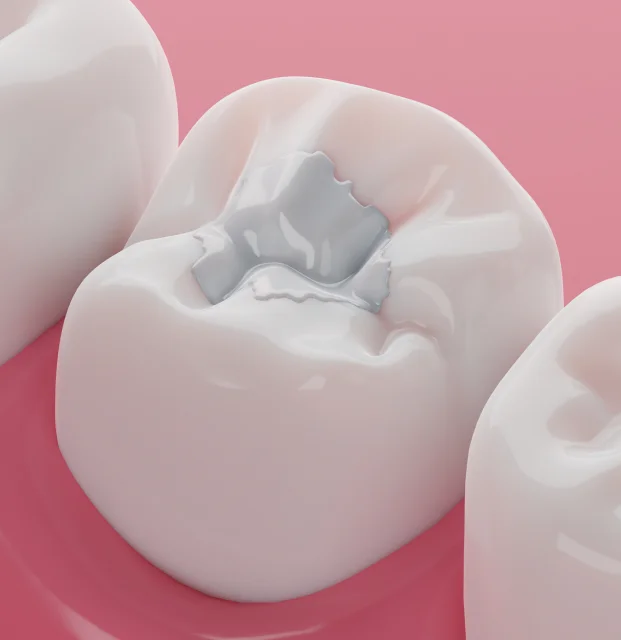
Why Our Office Uses Only Tooth-Colored Fillings
Traditionally, dental fillings have been made of silver amalgam. However, our dental office uses only composite, or tooth-colored, filling material. Our dentists and team have chosen to use composite filling materials in order to provide you with a more natural-looking result and to promote better long-term oral health.
Composite is a blend of durable plastic resin and fine glass-like particles. It is placed in layers, shaped to fit your tooth, and bonded in place, which lets our dentists rebuild the tooth with precision.
The Benefits of Composite Fillings
There are many benefits to composite fillings, including:
- Material that bonds to your tooth to provide more support for the tooth’s structural integrity
- Reduced risk of the treated tooth breaking or fracturing in the future
- Insulation from temperature changes caused by foods and beverages
- Better seals around the edges of the damaged area, increasing the tooth’s resistance to decay and leaks
- The ability to correct cavities that are too small for amalgam fillings to repair
- Fillings that can be repaired and replaced without being removed from the tooth
- No mercury or other metals are used, making the filling safer
On top of those advantages, a composite filling gives you a seamless look. When you smile, talk, or laugh, no one will see a dark metal spot, and you can feel confident about the way your repaired tooth looks.
Your Filling Visit, From Numbing to a Natural-Looking Smile
When you receive a composite dental filling, our dentists will carefully select a filling that matches your natural tooth color to give you a more beautiful and healthier-looking smile. Fillings can usually be placed in a single appointment. Here is what typically happens.
01
Examination and X-rays
Our dentists examine the tooth and review X-rays to see how large the cavity is and how deep it goes.
02
Choosing the shade
Our team selects a composite shade that matches the color of your natural teeth so the filling blends in.
03
Numbing for your comfort
We numb the area so you feel comfortable throughout the visit. If dental visits make you nervous, ask about nitrous oxide or IV sedation.
04
Removing the decay
Our dentists carefully remove the decayed part of the tooth and clean the area.
05
Placing and shaping the composite
The composite is placed in layers, hardened with a special light, and sculpted to match the shape of your tooth.
06
Checking your bite and polishing
Our dentists make sure your bite feels natural and polish the filling for a smooth finish.
Signs You May Need a Dental Filling
Cavities often start without symptoms, which is why regular dental cleanings and exams matter so much. You may need a filling if you notice:
- A toothache or pain when you bite down
- Sensitivity to hot, cold, or sweet foods and drinks
- A visible hole, pit, or dark spot on a tooth
- Food that keeps getting stuck between certain teeth
- A rough or sharp edge on a tooth, or a chipped tooth
- A filling that has cracked, worn down, or fallen out
Composite fillings are best for cavities and small to moderate areas of tooth damage. If a tooth is badly broken or heavily decayed, our dentists may recommend a porcelain crown instead, and if decay reaches the nerve, a root canal treatment may be needed. Our dentists will examine the tooth, review digital X-rays, and recommend the best option.
What Happens If a Cavity Is Left Untreated?
A cavity does not heal on its own once it has formed in the tooth. Early enamel damage can sometimes be reversed with fluoride treatments, but a true cavity keeps growing. Over time it can lead to pain, a broken tooth, or an infection that reaches the nerve and may require a root canal or even tooth removal and replacement. Treating it with a filling at the first sign of trouble is the simplest way to protect the tooth and avoid larger, more costly treatment.
Checking and Replacing Old Fillings
Fillings do not last forever. Over time, a filling can wear down, chip, or leak around the edges, which can let new decay form underneath. During your regular exam, our dentists check your existing fillings and will let you know if one needs attention. Depending on the situation, a filling may be repaired or replaced, and a larger restoration such as a crown may be recommended if the tooth needs more support. For minor chips or worn spots, dental bonding may also be an option.
Do Not Wait for a Cavity to Get Worse
For more information about composite dental fillings and to make an appointment with our dentists, contact our office today.
Our friendly team welcomes patients from Camp Springs, Largo, Bowie, and Lanham. If you have noticed a sensitive tooth or a spot that does not look right, schedule a visit so we can take a closer look.
Frequently Asked Questions
About Composite Dental Fillings
A composite dental filling is a tooth-colored material used to repair cavities and small amounts of tooth damage. It is made of a resin blend that bonds to your tooth, restoring its shape and strength. Because it can be matched to the color of your natural teeth, it blends in with your smile.
Getting a composite filling is usually comfortable. Our team numbs the area first, so you should feel pressure but not pain. You may have mild sensitivity afterward, which typically fades. If you feel anxious, ask about nitrous oxide or sedation dentistry.
Fillings can usually be placed in a single appointment. The time depends on the size and location of the cavity and how many teeth need treatment. Our team will give you an idea of what to expect before we begin.
Composite fillings can last many years with good care, but the lifespan varies depending on the size of the filling, your bite, your habits, and your oral hygiene. Grinding your teeth or chewing hard items can shorten their life. Our dentists check your fillings at regular exams and will recommend repair or replacement when needed.
Our dentists and team have chosen composite filling material to provide a more natural-looking result and to promote better long-term oral health. Composite bonds to the tooth for added support, can repair smaller cavities, and contains no mercury or other metals.
Composite fillings are widely used and are considered safe and effective for repairing cavities. They contain no mercury or other metals. If you have questions about the materials we use or about allergies or sensitivities, our dentists will gladly talk with you before treatment.
Because your mouth will be numb for a few hours, wait until the numbness wears off before eating to avoid biting your cheek or tongue. Composite fillings are hardened right in the office, so many patients can chew normally once they are no longer numb. Our team will give you specific instructions.
Many dental insurance plans help cover fillings, though coverage and limits vary by plan. We work with most major dental insurance plans, and our team can help you review your benefits before treatment. If you do not have insurance, ask about the Smile Loft Membership Club or our financing options.