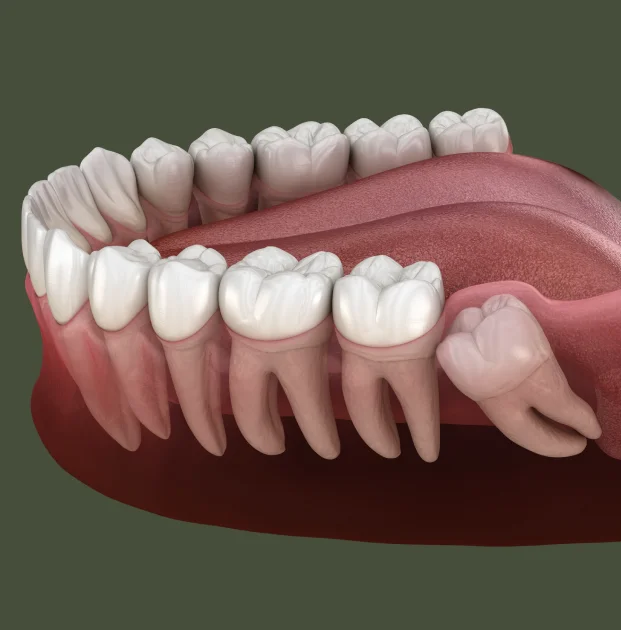
What Are Wisdom Teeth, and Why Do They Cause Trouble?
Wisdom teeth are the last molars on each side of the jaw. They are usually the last teeth to come in or erupt, usually between ages 16 and 20. Since they are the last of your permanent teeth to come in, there may not be enough room for them to grow in properly without becoming impacted or disturbing other teeth. Wisdom teeth that do not erupt properly can cause dental problems such as:
- Disturbance to the alignment of your teeth
- Damage to surrounding teeth
- Tooth decay
- Damage to the jawbone
- Tenderness, swelling, and infection in the gums and other tissues in the mouth
- Cysts
We recommend wisdom teeth removal to prevent these and other complications that can significantly affect your oral health. During your regular visits to our office, our dentists will evaluate your smile, check for signs of wisdom teeth eruption, and determine whether you would benefit from wisdom teeth removal.
Signs Your Wisdom Teeth May Need Attention
Contact our Camp Springs office if you notice:
- Pain or pressure at the back of your mouth
- Red, swollen, or tender gums around a back tooth
- Bad breath or a bad taste that does not go away
- Pain when you open your mouth or chew
- Swelling in your jaw or cheek
- Crowding or shifting of your front teeth
- A cavity in a wisdom tooth or the tooth beside it
Sometimes there are no symptoms at all, which is why regular checkups matter. If you have severe pain, fever, or facial swelling, learn about our emergency dentistry services.
What to Expect on the Day of Your Wisdom Tooth Extraction
During the procedure, our dentists and team will do everything we can to make your wisdom teeth removal as painless and pleasant as possible. Here is how it typically goes.
01
Consultation and imaging
Our dentists examine your mouth, review your X-rays or 3D images, and explain which teeth should be removed and why.
02
Planning your comfort
We talk through your options, including local anesthetic, nitrous oxide, and IV sedation, so you can choose what feels right.
03
Pre-treatment instructions
We explain how to prepare, such as eating, medications, and arranging a ride home if you will be sedated.
04
Numbing the area
You are made comfortable, and the teeth and surrounding tissue are numbed.
05
Removing the teeth
Our dentists gently remove the tooth or teeth. Impacted teeth may need a small incision, and some are removed in sections.
06
Closing and protecting the site
If needed, we place stitches and gauze to control bleeding and help the area heal.
07
Recovery instructions
Our team reviews how to care for yourself afterward and schedules any follow-up. See our post-operative instructions for more.
Staying Comfortable: Sedation and Anesthesia Options
We are dedicated to you and your oral health, and we want you to feel comfortable and confident in our care. If the idea of oral surgery makes you nervous, you have options. Local anesthetic numbs the area, while nitrous oxide can help you feel relaxed. For patients who want deeper relaxation, we offer IV sedation. Our team will help you decide which approach suits you and explain what to expect.
What to Know About the Cost of Wisdom Tooth Removal
The cost of removing wisdom teeth depends on how many teeth are involved, how deeply they are impacted, and the type of sedation you choose. At your consultation, our team will go over the treatment plan and what to expect, so there are no surprises.
Many dental plans help cover extractions, and some plans treat impacted teeth differently from simple ones, so our team will check your benefits and handle the claim for you. For the part you pay yourself, you can use Cherry, CareCredit® or Proceed Finance to break it into smaller payments, or pay with cash, check, or credit card.
Do Not Let Wisdom Teeth Cause You More Trouble
If you want to learn more about wisdom teeth removal, please contact our office today to schedule an appointment with us!
Our friendly team welcomes patients from Camp Springs, Largo, Bowie, Lanham, DC, and Virginia. Book an evaluation and find out whether your wisdom teeth need attention.
Frequently Asked Questions
About Wisdom Tooth Removal
Wisdom teeth are the last molars on each side of the jaw. They are usually the last teeth to come in, typically between ages 16 and 20. Because there may not be enough room for them, they can become impacted or disturb other teeth.
No. Some people have wisdom teeth that come in properly, are healthy, and can be cleaned easily. Our dentists recommend removal when teeth are impacted, decayed, infected, or likely to cause problems. They will examine your teeth and X-rays and explain whether removal is right for you.
Impacted wisdom teeth may cause pain, swelling, tenderness, bad breath, or a bad taste, but some cause no symptoms. An X-ray is the best way to tell. During your regular visits, our dentists check for signs of wisdom teeth eruption and can see if the teeth are trapped under the gum or bone.
Our team numbs the area, so you should feel pressure but not pain during the procedure. Afterward, some soreness and swelling are normal and can usually be managed with medication. If you feel anxious, ask about nitrous oxide or IV sedation. We will do everything we can to make your wisdom teeth removal as painless and pleasant as possible.
The time depends on how many teeth are being removed and how complex the removal is. A simple extraction may take less time than a deeply impacted tooth. Our team will give you an estimate after we review your X-rays.
Many patients feel better within a few days, and the gums continue to heal over the following weeks. Expect some swelling and soreness at first, a soft-food diet, and instructions to avoid straws and smoking. Contact our office if pain gets worse after a few days or you have heavy bleeding or fever.
Start with soft, cool foods, such as yogurt, applesauce, smoothies without a straw, soup, and mashed potatoes. Avoid hard, crunchy, spicy, or very hot foods that could irritate the healing site. As you feel better, you can slowly return to your regular diet. Our team will give you specific guidance
Many dental insurance plans help cover wisdom tooth removal, though coverage varies depending on how complex the removal is. The cost depends on the number of teeth and the type of sedation. Our team can check your benefits, file your claim, and explain what to expect. We also offer financing through partners such as Cherry, CareCredit®, and Proceed Finance.