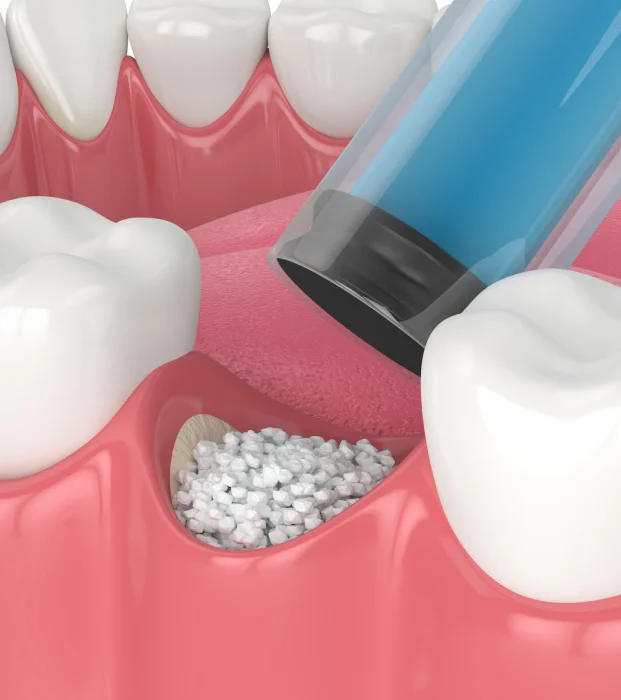
What Is a Bone Graft?
A bone graft is a procedure designed to replace missing bone in your jaw. Many patients with low bone density in their jaws may benefit from this type of treatment, especially those who are looking to receive dental implants. A graft can help strengthen the health of your mouth and restore bone loss by encouraging your bone tissue to regenerate on its own, eventually forming a stronger foundation for your smile.
Bone grafts can be used as treatment for several different occasions. If your jawbone begins to deteriorate after a recent tooth extraction, or if your jawbone is not dense enough for a dental implant, a bone graft may be the procedure suited to your needs.
Why Jawbone Loss Happens and Why It Matters
Your jawbone stays strong partly because your teeth stimulate it every time you chew. When that stimulation disappears, the bone can slowly shrink. Common causes include:
- Tooth loss or extraction: bone can begin to shrink soon after a tooth is gone
- Advanced gum disease: infection can break down the bone that supports your teeth
- Long-term denture use: removable dentures do not stimulate the bone beneath them
- Injury or trauma: damage to the jaw can affect the bone
- Infection or other conditions: problems in the jaw can lead to bone loss
When bone is lost, the gums can recede, nearby teeth can shift, and the shape of your face can change over time. Treating bone loss early can help protect your remaining teeth and keep more options open.
From Imaging to a Stronger Foundation: Your Bone Graft Step by Step
Every graft is planned around the specific needs of your mouth. Here is how the process typically unfolds.
01
Consultation and imaging
Our dentists examine your mouth, talk with you about your goals, and use 3D imaging to see exactly how much bone you have and where it is needed.
02
A personalized treatment plan
We explain the type of graft recommended, the steps, the timeline, and the costs, and we answer your questions before you decide
03
Comfort during treatment
We numb the area so you feel comfortable. If you feel nervous, ask about sedation dentistry.
04
Placing the graft
During your procedure, we will transplant a portion of bone from another area of your jaw into your jawbone. In certain situations, we can use artificial bone or bone from another area of your body.
05
Protecting the site
The graft is covered, and the gum is closed, to protect the area while it heals.
06
Healing and new bone growth
Your new bone transplant will then grow together with your natural bone to strengthen your jawbone and promote new bone development. Healing takes time, often several months, and the length varies by patient and by graft.
07
Follow-up visits
We check your healing and confirm your bone is ready before moving on to implant placement or other restorations.
How Bone Grafting Fits Into Your Implant Plan
For many patients, a bone graft is one step in a larger plan. After the graft heals, our dentists can place your dental implants, and then complete your smile with implant restorations, such as crowns, bridges, or dentures. Because we offer these services in one office, your care stays organized from the first scan to the final restoration.
Understanding the Cost of Bone Grafting
A bone graft is often one part of a bigger treatment plan, so we think it helps to see the whole picture. We will give you an itemized breakdown that shows what the graft costs and how it fits with any implant care that follows, so you can plan without guesswork.
Insurance coverage for grafting varies. Some plans may contribute when a graft is linked to an extraction or to treating bone loss, while others limit coverage for implant-related care. Our team will look at your benefits and file claims for you. For the portion you are responsible for, you can use financing through Cherry or LendingPoint™ to make payments more manageable.
Ready to Rebuild Your Foundation?
If you would like more information about the procedure, contact our team today or schedule a visit!
Our friendly team welcomes patients from Camp Springs. Book a consultation and find out how a bone graft could prepare you for a stronger, healthier smile.
Frequently Asked Questions
About Bone Grafts
A dental bone graft is a procedure that replaces missing bone in your jaw. Graft material is placed where bone has been lost, and it acts as a framework that encourages your own bone to regenerate. Over time, the new bone grows together with your natural bone and forms a stronger foundation for your smile.
A dental implant needs enough healthy jawbone to hold it firmly in place. If you have lost bone after an extraction, gum disease, or long-term tooth loss, there may not be enough to support an implant. A bone graft rebuilds that bone so the implant has a stable base. Our dentists will measure your bone with 3D imaging to find out.
Our team numbs the area during the procedure, so you should feel pressure but not pain. Afterward, you can expect some soreness, swelling, or bruising for a few days, which is usually manageable with the medication our dentists recommend. If you feel anxious, ask about nitrous oxide or sedation dentistry.
Healing varies by patient and by graft, and it often takes several months for new bone to grow and mature. Our dentists will check your progress with follow-up visits and imaging, and tell you when your jaw is ready for the next step, such as implant placement.
A graft may use bone from another area of your jaw or body, donor bone, animal-derived bone, or synthetic material. In certain situations, we can use artificial bone or bone from another area of your body. Our dentists will explain the options and recommend the one that fits your needs
Most patients return to normal activities within a day or two. Expect mild swelling and soreness, a diet of soft foods at first, and instructions to avoid chewing on the graft site. Avoid smoking, which can slow healing. Our team will give you detailed instructions and be available if you have questions.
Bone loss can continue over time. The gums may recede, nearby teeth can shift, and the shape of your face may change. It can also make dental implants harder to place later, or limit your restoration options. Addressing bone loss earlier usually gives you more choices.
Coverage varies. Some dental plans help with a graft when it is connected to an extraction or to treating bone loss, while others limit coverage for implant-related care. Our team can check your benefits, file your claim, and give you an itemized estimate. We also offer financing options such as Cherry. See our payment options.